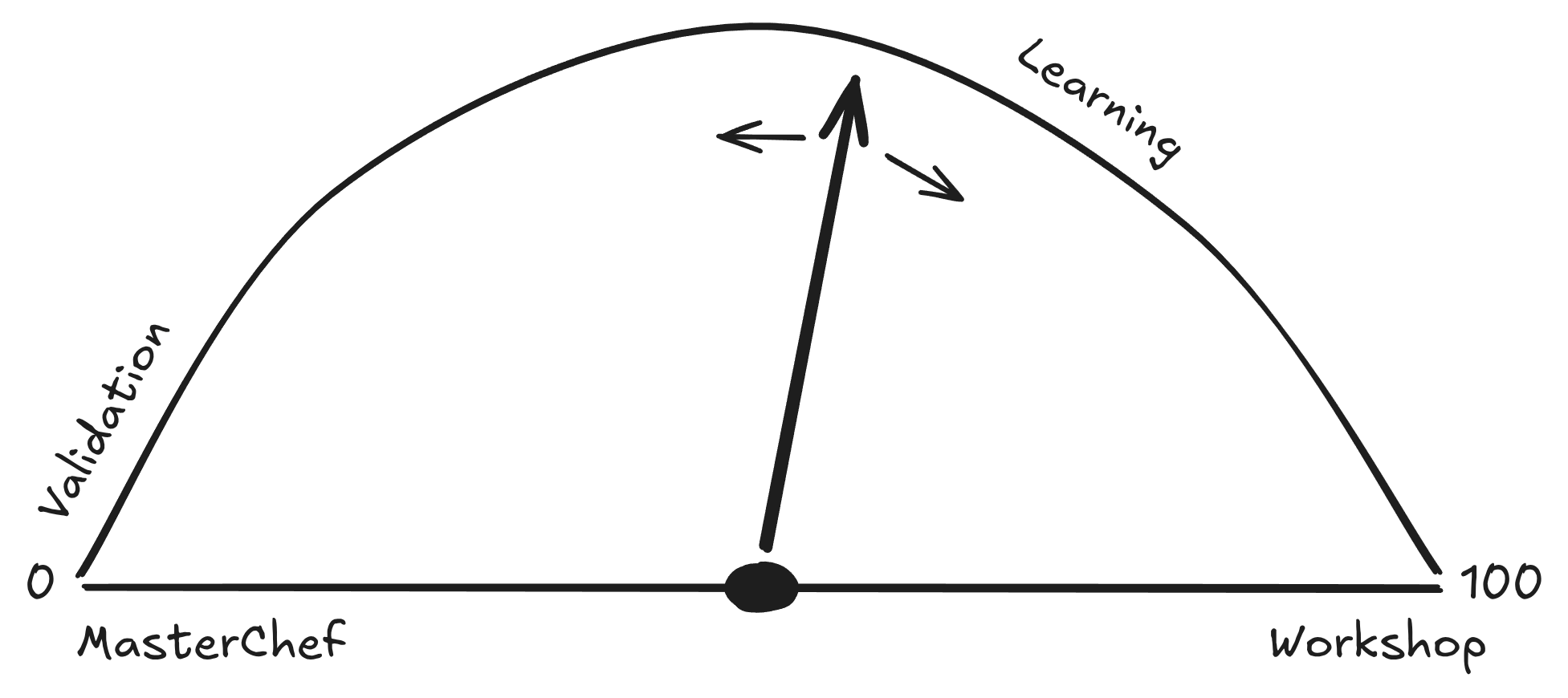

- the designer has the ability to define the types of help, the moments when they need it, the mode of interaction, or the level of automation;
- it allows a flexible combination of resources and processes to create the learning and support experiences they consider most appropriate, and
- it makes intensive use of data and AI tools
- Curation of digital resources
- One-to-one or group communication channels
- AI agents for recommendation and feedback
- Continuous and formative assessment
- Synchronous actions (masterclasses, webinars, group sessions)
The Kitchen Metaphor
We like to explain the logic of Missions by establishing an analogy with the world of cooking, which we can understand as a “laboratory” where a series of ingredients, tools and recipes allows us to prepare dishes with a high degree of freedom. Cooking is actually an active learning process that places the apprentice cook at the center of the process. But there are several ways to learn to cook, with great differences in their effectiveness. On one hand we have many resources (videos, posts, television programs) that follow the masterclass model. An expert (preferably a renowned chef) explains to the audience how a certain dish is cooked while working. There are also cooking “workshops” where an expert guides and accompanies trainee cooks to develop the necessary knowledge and skills through practice itself. Finally we have the “MasterChef” format where a series of cooks compete to demonstrate their skill and the quality of their dishes before a jury that establishes the rules and decides the winners. Missions works in two ways. First, in its learning logic, like a cooking workshop where in addition, thanks to the use of experts and technology, guidance and support are provided by the best chefs. Second, as a validation tool with a model similar to MasterChef.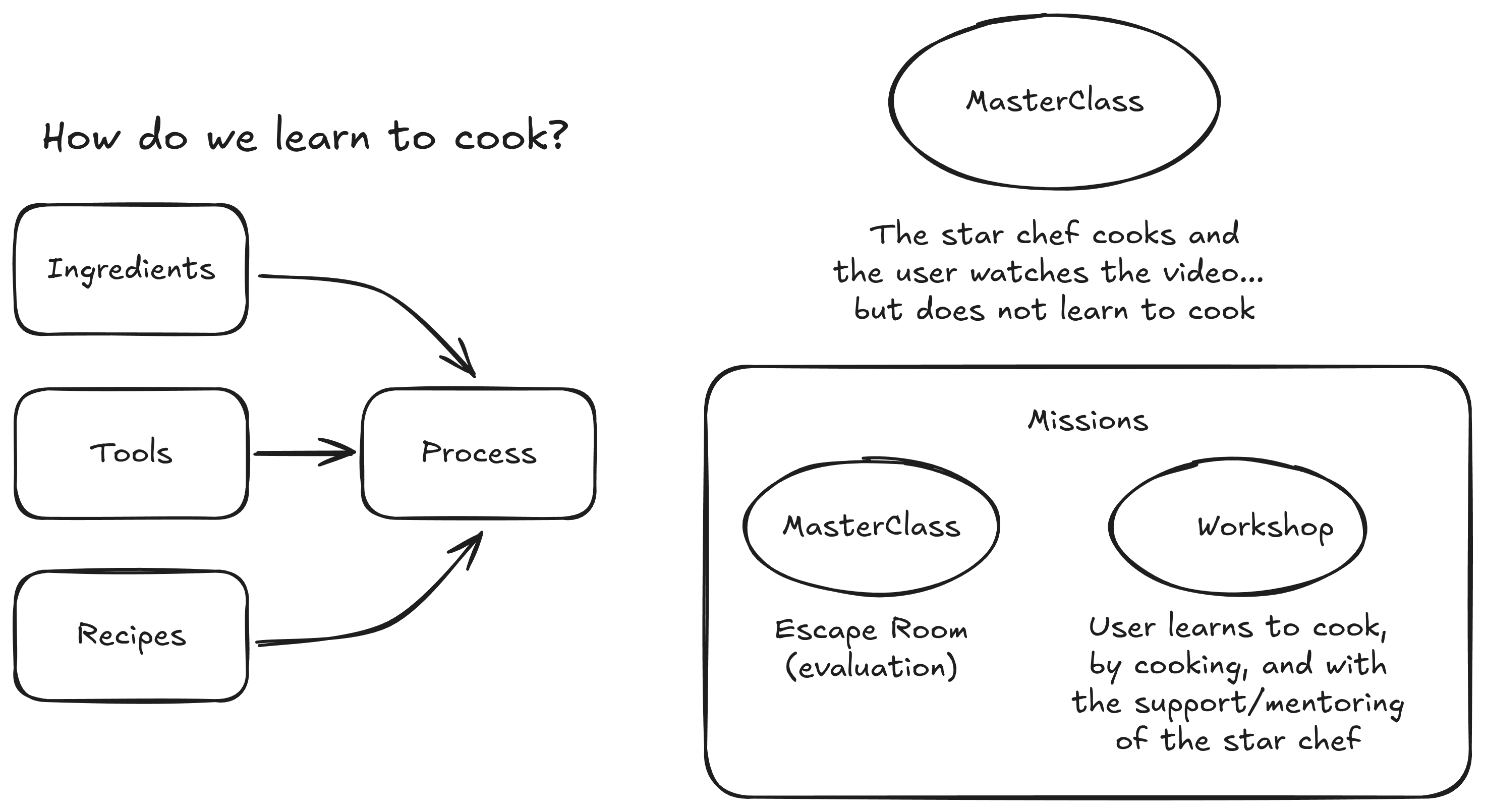
Diversity of Agents and Support Formats
Missions allows the designer to modulate the mission experience between two extremes that, following the kitchen metaphor, we could place in MasterChef and intensive and guided learning workshop. To do this, it flexibly combines agents and formats. Who executes the support? We have three options:- experts and teachers in professional profiles and functions;
- peers through the creation of communities where learners share experiences and recommendations; and
- AI agents, which can function completely autonomously or serve as assistants to human mentors.
- Recommendation and access to educational resources (texts, videos, other courses in digital format developed in-house or by third parties)
- AI agents that accompany the user throughout the mission
- Sessions guided by experts (masterclasses, doubt resolution…)
- Support and guidance of the learner throughout the mission resolution by experts and peers